
What You're Actually Getting Into
Estonia is the country that makes tech people go slightly glassy-eyed when they visit. It invented Skype. It built the world's first fully digital government. In 2005 it became the first country to hold a national election online. By the time most countries were still arguing about whether to put government forms on a website, Estonia had made physical bureaucracy essentially optional. You can sign a legal document, register a company, vote, file taxes, and access your medical records from a single chip on your ID card. The country has about 1.4 million people and the ambition of somewhere ten times that size.
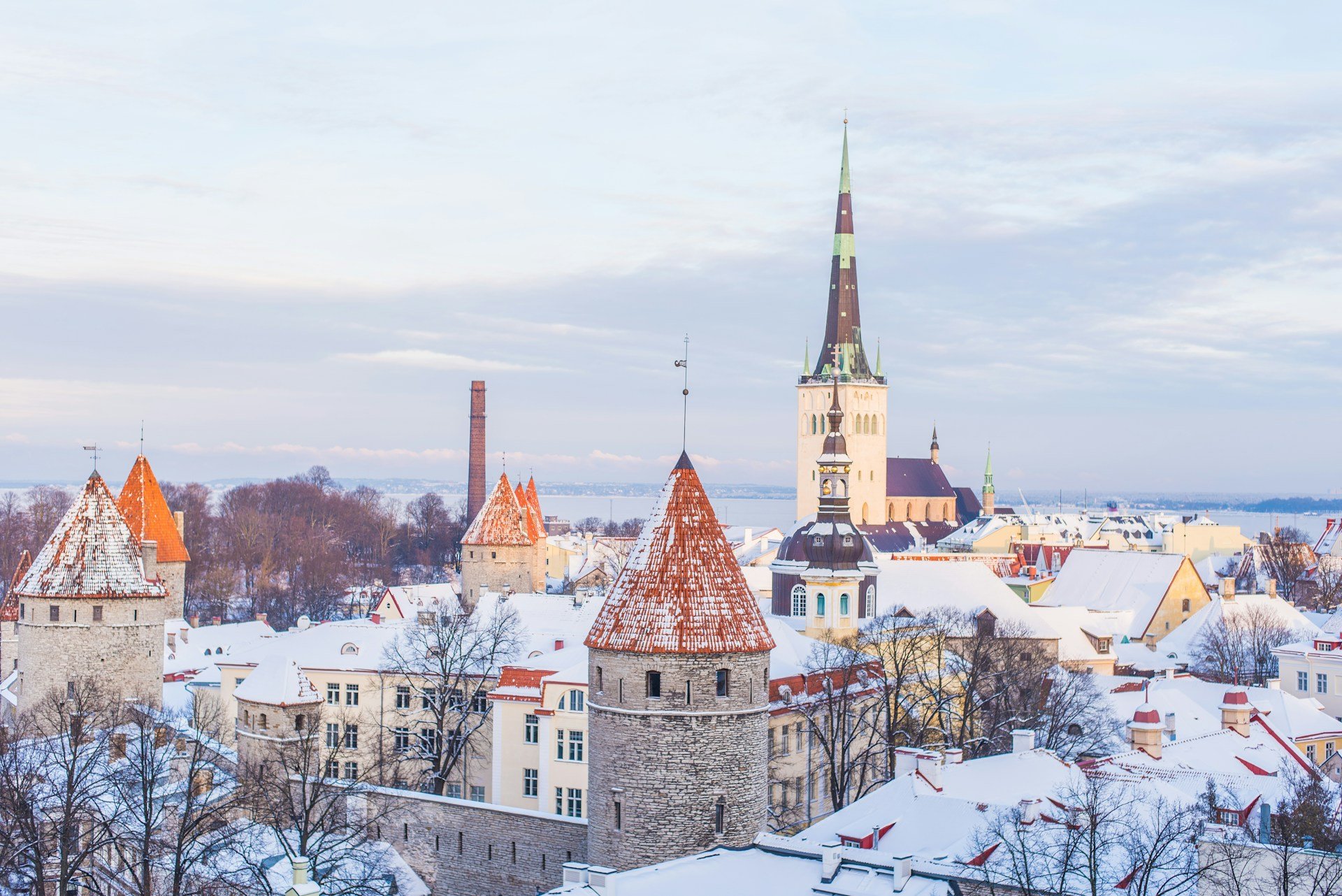
But you probably didn't come for the e-governance. You came because someone showed you a photo of Tallinn's old town — limestone towers, orange-tiled rooftops, a medieval merchant's square that looks like it was built as a film set — and you wanted to know if it was real. It is. The UNESCO-protected old town is one of the best-preserved medieval city centers in northern Europe, and unlike many of its competitors it hasn't been polished into a theme park. The bars are in the basements of 14th-century buildings and they serve Estonian craft beer at prices that will make you briefly question your life choices in more expensive countries.
The bigger secret is what's outside Tallinn. Half the country is forest. There are over 2,000 islands. The Lahemaa National Park, 70km east of the capital, is pine forest, boulders deposited by glaciers, manor houses, and a coastline that doesn't look like anything else in the region. The island of Saaremaa has a meteorite crater, windmills from the 18th century, and a spa resort culture built around juniper and seawater that the rest of Europe hasn't caught up with yet.
The one honest difficulty: Estonians are reserved in a way that makes Finns look effusive. This is not hostility. It's a cultural register that values directness and silence over small talk. Once you understand the difference, you'll find them warm, dry-humored, and remarkably helpful. Give it a day.
Estonia at a Glance
A History Worth Knowing
Estonia's history is largely a story of other people arriving and deciding to stay. The Estonians themselves, a Finno-Ugric people linguistically closer to Finns and Hungarians than to any of their geographical neighbors, have lived here for at least 5,000 years. What they haven't had for much of recorded history is sovereignty over their own territory. The 13th century brought German crusaders — the Livonian Brothers of the Sword — who Christianized the region by force and established a German-speaking landowning class that would persist for 700 years. The Danes briefly held the north. Sweden took over in the 17th century. Peter the Great took it from Sweden in 1710 and it remained Russian until 1918.
The period of German Baltic noble rule left marks that are still visible. The manor houses scattered across the Estonian countryside, and Tallinn's old town itself, were built by and for a German merchant class. The Estonian peasantry farmed land they didn't own, spoke a language the ruling class barely acknowledged, and maintained a culture that survived through song. This is not a metaphor. Estonian identity was literally preserved through choral singing. The national song festival, held every five years since 1869, gathers up to 30,000 singers on a single stage and draws a quarter of the entire population as audience. The tradition began as an act of cultural defiance and has never stopped being one.
The first period of Estonian independence, from 1918 to 1940, lasted exactly long enough to establish a national identity, a constitution, and an agrarian reform that redistributed German noble land to Estonian farmers. It ended with the Molotov-Ribbentrop Pact of 1939, a secret protocol between Nazi Germany and the Soviet Union that assigned Estonia to the Soviet sphere. Soviet occupation began in June 1940. German occupation followed in 1941. Soviet re-occupation in 1944. What followed was 47 years of Soviet rule that included mass deportations to Siberia in 1941 and 1949 — events that removed roughly 10% of the population in two operations. Every Estonian family has a deportation story. These are not distant history.
The second independence came through singing. In 1987 and 1988, as Soviet authority began to fracture, Estonians, Latvians, and Lithuanians organized a series of mass singing events that escalated into explicit political protests. The Baltic Way of August 23, 1989 — the 50th anniversary of the Molotov-Ribbentrop Pact — saw two million people form a human chain stretching 675km through all three Baltic states. It remains one of the most powerful peaceful demonstrations in European history. Estonia declared the restoration of its independence in August 1991. The Soviet Union dissolved four months later.
What happened next is the part that astonishes visitors who dig into it. A country of 1.4 million people, emerging from 50 years of Soviet occupation with no functioning market economy and essentially no digital infrastructure, decided to build everything from scratch. Rather than digitizing existing bureaucratic systems, they deleted the bureaucracy and built a digital state in its place. By 2001 they had online tax filing. By 2005, online voting. By 2014, e-Residency — allowing non-citizens anywhere in the world to register Estonian companies and access EU digital services remotely. The country that had nothing in 1991 had become a model for digital governance globally by 2010.
Understanding this history explains the particular texture of modern Estonia: a deep pride in independence that never quite settles into complacency, a wariness toward Russia that is historically earned rather than paranoid, and an almost competitive relationship with efficiency and innovation that makes sense when you know the country had to build itself from almost nothing in about a decade.
The ancestors of modern Estonians settle the Baltic coast. One of Europe's oldest continuously inhabited populations.
Livonian crusaders and the Danish crown divide Estonia. German noble rule begins and lasts 700 years.
The Estonian national song festival begins. Cultural identity preserved through choral tradition under foreign rule.
Estonia declares independence after WWI. Twenty-two years of sovereignty follow.
Soviet annexation, German occupation, Soviet re-occupation. Mass deportations to Siberia in 1941 and 1949.
Two million people form a 675km human chain through all three Baltic states. The Singing Revolution peaks.
Estonia restores independence. Digital state-building begins almost immediately.
Estonia joins both simultaneously. A security anchor earned through recent memory of occupation.
Most digitally advanced government on earth. Skype's birthplace. Home of Wise, Bolt, and a disproportionate number of unicorn startups.
Top Destinations
Estonia is small enough to cover comprehensively in two weeks but rewards slower travel more than most countries its size. Tallinn is the obvious and correct starting point. Beyond it, the country divides naturally into the western islands, the forested northeast, the university city of Tartu, and the bog and coastal landscapes that make up Lahemaa National Park. A car makes everything outside Tallinn significantly more accessible.
Tallinn
Tallinn's old town sits on a limestone hill above the lower city and is enclosed by a 2.4km medieval wall with 26 towers still standing. The upper town — Toompea — has the parliament, the Alexander Nevsky Cathedral (Russian Orthodox, built by the Tsar in 1900 as a deliberate imposition of Russian authority, now a strange and beautiful landmark), and the best views over the orange rooflines. The lower town has the guild halls, the Town Hall square, and the alleyways where the bars have been since the 14th century. Telliskivi Creative City, a former factory complex 15 minutes' walk from the old town, is where Tallinn actually eats and drinks in 2026 — market stalls, craft breweries, studios, and a flea market on weekends.
Lahemaa
70km east of Tallinn, Lahemaa was the first national park established in the Soviet Union, in 1971 — a fact the Soviets presumably intended as a showcase and the Estonians have maintained as something far more genuine. It covers pine forest, raised bogs, rivers, and a deeply indented Baltic coastline of limestone cliffs and small fishing villages. The manor house at Palmse has been restored to its 18th-century Baltic German condition and is worth a morning. The boardwalk through Viru Bog takes 3km through a landscape that looks deliberately otherworldly and takes about two hours. Rent a car from Tallinn and allow a full day minimum.
Saaremaa
Estonia's largest island, connected to the mainland by a 2.4km causeway. A meteorite crater at Kaali, 110 metres wide, hit around 1500 BCE and is surrounded by a low forest that makes it feel genuinely prehistoric. 18th-century wooden windmills at Angla are the island's most photographed landmark. The Kuressaare Castle, a medieval bishop's castle on the southern coast, is one of the best-preserved in the Baltic region. The island's spa resort industry, built around juniper products and seawater, is serious and popular with Finnish and Latvian visitors who know it well. Two nights minimum.
Tartu
190km south of Tallinn, Estonia's second city has been a university town since 1632 and has the energy to prove it. The University of Tartu is the country's oldest and most prestigious, and the city's entire culture orbits it — small galleries, independent bookshops, cafes that take coffee seriously, and a surprisingly strong restaurant scene for a city of 95,000. The Estonian National Museum, opened in 2016 in a building designed partly from a former Soviet military runway, is one of the best ethnographic museums in the region. Paired with Tallinn, Tartu completes the picture of modern Estonia.
Pärnu
Estonia's summer capital, on the west coast, 130km south of Tallinn. The beach is wide, white, and backed by wooden villas from the early 20th century when Pärnu was a fashionable resort for Russian and Baltic German aristocracy. In July the town fills with Estonians and Latvians. In May or September it's almost empty and extremely pleasant. The mud spa culture here dates from the 1800s and the town has maintained it without irony.
North Estonian Cliffs
The Glint — a 1,200km limestone escarpment running east to west across northern Estonia — drops into the sea at several dramatic points along the north coast. The Ontika cliffs reach 56 metres above the water and are the highest coastal cliffs in Estonia. Toila Spa hotel sits at the edge. The drive along Route 1 from Tallinn to Narva passes all of it and is one of the better road trips in the Baltic region.
Narva
Estonia's easternmost city sits on the Russian border, separated from the Russian city of Ivangorod by a river 200 metres wide. Two medieval castles face each other across the water: Narva Castle on the Estonian side, Ivangorod Fortress on the Russian. The city is 97% Russian-speaking and bears visible Soviet-era architecture that gives it a completely different atmosphere to anywhere else in Estonia. The border dynamic — EU and NATO on one bank, Russia on the other — is sharp and worth experiencing in person. Go with awareness and no political agenda.
Helsinki by Ferry
Not Estonia but intimately connected to it. Tallinn to Helsinki by fast ferry takes 2–2.5 hours and costs around €30–60 each way. The two cities are culturally distinct but share architectural DNA, a love of saunas, and a complicated relationship with Russian neighbors. Many visitors combine both in a single trip. Book Tallink or Eckerö Line at least a week ahead in summer.
Culture & Etiquette
Estonian social culture rewards patience. The first interaction with any Estonian — a hotel receptionist, a shopkeeper, someone giving directions — will be direct, efficient, and entirely free of small talk. This is not rudeness. It's a cultural baseline that says: I respect your time and mine. If you interpret it as coldness and respond in kind, you'll have a functional but thin experience. If you slow down, ask a genuine question, and give them a moment, you'll often find a dry wit and a willingness to help that goes considerably further than the initial impression suggested.
The sauna is the center of Estonian social life in a way that has no equivalent in most Western cultures. It is not a spa amenity. It is where serious conversations happen, where business deals are made, where families spend Saturday evenings. Being invited to someone's sauna is a genuine mark of trust. If you're invited, go. The protocol is simple: you get very hot, you cool down (in the sea, a lake, or a cold shower), you repeat. Conversation is low-key and unhurried. That's the point.
Estonians are not uncomfortable with silence in conversation. Don't fill it with nervous chatter. A pause is thinking time, not an awkward gap. Match the energy.
Standard across Estonia. Look for the shoe rack at the entrance. Don't wait to be told.
Arriving on time is a sign of respect. Arriving late without advance notice is genuinely considered rude. Five minutes late merits an apology.
"Tere" (hello), "aitäh" (thank you), "palun" (please/you're welcome). Estonians will appreciate the attempt in a way that's noticeably warmer than their baseline.
Estonia is nearly cashless. Buses, taxis, cafes, market stalls — card or contactless is expected and usually preferred. Keep a small amount of cash for rural areas.
Estonia considers itself Northern European — geographically, culturally, and politically. The Soviet era is part of their history but emphatically not their identity. The distinction matters to Estonians and is worth respecting.
About a quarter of Estonia's population is ethnically Russian, most born in Estonia. They are Estonian citizens with complicated histories. Assumptions about nationality based on language are both inaccurate and unwelcome.
The baseline volume in Estonian public life is lower than in most of Europe. Loud conversations in restaurants, on public transport, or in queues stand out and are considered inconsiderate.
Estonians value privacy strongly and digital privacy doubly so. Photographing strangers — especially in non-tourist contexts — without indication of consent is not well received.
Estonian farewells are brief. "Nägemist" (goodbye) and they're gone. There is no extended doorstep conversation. This is not abruptness — the warmth was in the visit, not the exit.
Song & Singing
The Estonian song festival, Laulupidu, is held every five years and draws up to 30,000 singers onto a single outdoor stage. The next is in 2027. Attending it is one of the most overwhelming experiences available in any small country — a quarter of the population, gathered to sing, in a tradition that survived occupation and became the instrument of liberation. The Dance Festival alternates with it. Keep dates in mind when planning.
Forest Culture
Half the country is forest and Estonians relate to it with an intimacy that shapes their worldview. Mushroom foraging in autumn is a near-universal activity — families go together, it is treated as both practical and meditative, and the knowledge of which mushrooms to pick where is passed down with the same seriousness as any other family inheritance. If offered foraged mushrooms at any point, say yes.
Sauna Culture
The sauna in Estonia is not a luxury — it's infrastructure. Traditional smoke saunas (suitsusaun) in rural areas are UNESCO-listed intangible heritage. The process: heat the stones, generate steam with water infused with birch branch or wormwood, sweat, cool down in whatever cold water is available, repeat for two to three hours. Birch branch whisks (viht) are used to stimulate circulation. The whole thing is excellent and you will sleep better afterward than you have in years.
Digital Identity
Every Estonian citizen carries a chip ID card that is also their digital identity, health insurance card, travel document within the EU, and signature device. The country's e-government infrastructure handles 99% of public services online. This is not merely an interesting fact — it shapes how Estonians think about privacy, data, efficiency, and state authority in ways that make conversations with them about these topics unusually informed and direct.
Food & Drink
Estonian food is having a moment that hasn't quite reached the outside world yet. The traditional base — black rye bread, pork, sauerkraut, blood sausage, smoked fish, foraged mushrooms and berries — has always been more interesting than its reputation. What's happened in the last decade is that a younger generation of Estonian chefs has taken those ingredients seriously, applied modern technique, and produced something genuinely worth seeking out. Tallinn now has multiple restaurants that would earn serious attention in any European capital. Most of them cost about half what they'd charge in Copenhagen or Helsinki.
The craft beer scene followed a similar trajectory. Põhjala and Tanker are the best-known names internationally but there are a dozen smaller breweries producing interesting things. A 0.5L craft beer in Telliskivi runs €4–5. The same beer in a Tallinn old town tourist trap costs €7. Go to Telliskivi.
Black Rye Bread
Estonian must leib — dark, dense, slightly sour rye bread — is one of the great breads of northern Europe and Estonians will tell you this themselves with complete confidence. It comes with every meal, it's eaten for breakfast with butter and cheese, and the best version is from a bakery rather than a supermarket. Pagar Anni bakery in Tallinn's Kadriorg neighborhood is the reference standard. The bread is also the base for kvass, a fermented drink made from the crusts that tastes better than it sounds.
Wild Meat & Game
Estonia has a hunting tradition that feeds directly into the restaurant supply chain. Elk, wild boar, venison, and duck appear on menus in ways that are genuinely seasonal and locally sourced rather than decorative. The elk stew at Rataskaevu 16 in Tallinn is the entry point — hearty, deeply flavored, served with black bread, and about €16. For something more refined, NOA Chef's Hall on the northern coast of Tallinn does game with a New Nordic approach at €80–120 for a tasting menu.
Smoked & Pickled Fish
Baltic sprat, smoked eel, and pickled herring are the building blocks of the Estonian table. The Central Market in Tallinn has a fish hall that sells them directly from the boats in a way that hasn't changed much since the 1930s. The best sprats in the country come from Saaremaa, where they're smoked over alder with a technique specific to the island. Buy them in tins from any supermarket — the Saaremaa brand is not a regional delicacy, it's a national institution.
Foraged Berries & Mushrooms
Chanterelle mushrooms appear on every Estonian menu from July through October. In season, they're cheap, abundant, and treated as a basic ingredient rather than a luxury. Wild blueberries (which taste completely different from farmed ones — smaller, more intense, almost wine-dark) appear in desserts, sauces, and preserves. Lingonberries go with everything savory. The forest abundance is real and the Estonian kitchen was built around it.
Craft Beer & Kali
Põhjala Brewery in Tallinn's Noblessner harbor district is the flagship of Estonian craft beer, producing dark Baltic porters and imperial stouts that regularly win international awards. The Põhjala tap room is one of the best places to drink in the city. Kali — a mildly fermented rye bread drink, essentially the local kvass — is non-alcoholic, sold everywhere in summer from bright yellow barrels on street corners, and delicious in a way that's difficult to explain without drinking it.
Café Culture
Tallinn has an excellent café scene anchored in the old town and Kalamaja neighborhood. Kohvik on Vene street has been the benchmark old-town café for years. In Kalamaja, F-hoone in Telliskivi serves weekend brunch to most of young Tallinn and is worth the queue. The cinnamon rolls here are not as famous as their Danish counterparts but they should be. Coffee is taken seriously and costs €3–4 for a flat white, which is one of the reasons Estonia is a good country to be a remote worker in.
When to Go
The honest answer is June and July, and the reason is light. Estonia sits at roughly the same latitude as Alaska's southern coast, and at midsummer the sun barely sets — Tallinn gets around 18.5 hours of daylight in late June, with a twilight that technically qualifies as night for only a few hours around 1am. The effect on the city is palpable: outdoor terraces that were empty in April are suddenly packed at 10pm with people who haven't registered that it should be dark. The white nights of the Baltic summer are one of the more quietly extraordinary natural experiences in Europe, and most people don't know they happen this far south.
Midsummer
Jun – JulWhite nights, maximum daylight, islands and national parks in full season. Jaanipäev (Midsummer Eve, June 23–24) is the biggest holiday of the year — bonfires, music, and Estonians heading to the countryside en masse. Book accommodation well in advance for that weekend.
Late Summer
Aug – SepChanterelle mushroom season. Warm enough for swimming (briefly). Harvest markets in the countryside. Tallinn's old town cools down from peak crowds. The forests begin to turn in late September and the light becomes the low amber that photographers come specifically for.
Winter
Dec – FebTallinn's old town under snow is visually extraordinary and the Christmas market on Town Hall Square is one of the best in northern Europe. Very cold (can reach -15°C in January), dark by 3:30pm, but the cosiness of Estonian winter culture — warm cafes, mulled wine, the specific comfort of being inside when it's properly cold outside — is entirely real.
Early Spring
Mar – AprThe least rewarding time. Snow has gone but spring hasn't properly arrived. Grey, muddy, and cold without the winter magic. Islands and national park trails are often still waterlogged. Perfectly functional for a Tallinn city break but not the time to see the Estonian countryside at its best.
Trip Planning
Three days covers Tallinn. Five days adds Lahemaa and a day trip. A full week gives you Saaremaa or Tartu. Ten days or more means you can see Estonia properly: the islands, the bogs, the north coast cliffs, and the Russian border town of Narva. A car is strongly recommended for anything outside Tallinn.
Tallinn
Day one: old town on foot — Toompea hill, Alexander Nevsky Cathedral, the view from the tower at Kiek in de Kök. Evening in Telliskivi for dinner and a Põhjala beer. Day two: Vabamu Museum in the morning (allow two hours, not one), Kadriorg Park and the KUMU Art Museum in the afternoon. Day three: Kalamaja neighborhood and the Seaplane Harbour museum — the Baltic German seaplane hangars holding four floors of maritime history are an underrated morning.
Lahemaa National Park
Rent a car from Tallinn (budget €40–60/day). Drive 70km to Lahemaa. Viru Bog boardwalk in the morning — 3km, two hours, otherworldly. Palmse Manor for lunch and afternoon. Drive to Altja fishing village for the night in a guesthouse. Day five: the Lahemaa coastal walk and the Sagadi Manor forest trail before driving back.
Tartu or Helsinki
Either take the 2.5-hour bus to Tartu for the Estonian National Museum and the university town atmosphere, or take the morning ferry to Helsinki (2 hours) for a day in the Finnish capital and the evening ferry back. Both are excellent. The ferry option is technically two countries in one day and is entirely feasible.
Tallinn
Four days to explore properly: old town, Kadriorg, Kalamaja, the Seaplane Harbour, and a day trip to the open-air museum at Rocca al Mare where 18th and 19th-century wooden farmhouses were relocated from across Estonia and reassembled on a forested peninsula west of the city.
Lahemaa
Two full days in Lahemaa with an overnight in a guesthouse at Võsu or Käsmu fishing village. Viru Bog, Palmse and Sagadi manors, the coastal walk, and enough forest time to understand why Estonians talk about trees the way other people talk about family.
Saaremaa
Drive or take the bus/ferry combination from Tallinn to Saaremaa (3–4 hours total). Two nights on the island: Kaali crater, Angla windmills, Kuressaare Castle, a juniper spa treatment, and enough time on the island's back roads to find the isolation that makes it different from the mainland.
South Estonia: Tartu + Võru + Setomaa
Drive south through the lake country to Tartu for two nights. Estonian National Museum, university quarter, good restaurants. Then further south to Võru and the Seto region — a distinct Finno-Ugric people with their own language and folk culture, living in the southeastern corner of Estonia near the Russian border. An unusual and rarely visited part of the country.
Tallinn + Helsinki Day Trip
Five days in Tallinn with a day trip to Helsinki by ferry. Every neighborhood of the old town, the creative districts, the harbor area, the Seaplane Harbour. One evening at NOA Chef's Hall for the tasting menu with Baltic coast views.
Lahemaa + North Coast
Three days: Lahemaa in depth, then continue east along the north coast through the limestone cliffs to the Ontika viewpoint and Toila. Stay at the Toila Spa Hotel for one night, then continue to Narva for the border castle view before returning west.
Saaremaa + Hiiumaa
Four days on the western islands. Two nights on Saaremaa, then a ferry to Hiiumaa — Estonia's second-largest island, even quieter than Saaremaa, with a 19th-century lighthouse at Kõpu that is one of the oldest continuously operating lighthouses in the world.
South Estonia: Pärnu, Tartu, Setomaa
A beach night in Pärnu (in summer). Two nights in Tartu. Then the lake country and Seto region in the deep south. End by driving back to Tallinn through the Jõgeva farming county, stopping at Põlva for the forest walks around Lake Tamula, and arriving back in Tallinn for a final evening in Telliskivi.
Vaccinations
No mandatory vaccinations required. Tick-borne encephalitis vaccination is recommended for anyone spending time in forests or national parks, particularly from April through November. Ticks are present throughout Estonia's forested areas and TBE is a genuine risk. Get the vaccination at least two weeks before your trip.
Full vaccine info →Connectivity
Estonia has free public wifi in virtually every public space including buses, libraries, and many outdoor areas. EU roaming applies for EU/EEA SIM cards. Non-EU visitors can get an eSIM via Airalo. Coverage is excellent in Tallinn and most towns; rural Saaremaa and the far east can have gaps.
Get Estonia eSIM →Power & Plugs
Estonia uses Type C and Type F (Schuko) plugs at 230V/50Hz. Standard continental European adapter. North American and UK visitors need a plug adapter; most modern electronics handle the voltage automatically.
Language
Estonian is a Finno-Ugric language unrelated to any Indo-European language, which means your existing European language skills don't help at all. The good news: English works everywhere in Tallinn and in most tourist contexts. Russian is widely spoken in Narva and the northeast. Download Google Translate with Estonian offline for rural areas.
Travel Insurance
EU/EEA visitors covered by EHIC/GHIC for emergency healthcare. Non-EU visitors should carry travel insurance with medical coverage. Estonian hospitals are good, particularly in Tallinn. Rural emergency response times can be longer — insurance with evacuation cover is worth having for active outdoor trips.
Ticks
Ticks in Estonian forests carry both Lyme disease and tick-borne encephalitis. Wear long sleeves and trousers in forested areas April through October. Check yourself after forest walks. The TBE vaccination significantly reduces risk for the more serious disease. Tick removal tools are sold in every Estonian pharmacy.
Transport in Estonia
Tallinn's public transport — trams, buses, and trolleybuses — is free for registered residents and costs €1.50 for a single fare for visitors, or €3/day with a green card from any R-kiosk. The network is efficient and covers the city well. Beyond Tallinn, the picture changes. Intercity buses are the backbone of Estonian public transport and are reliable, affordable, and run by Lux Express and Tpilet among others. But rural areas, the islands, and anything off the main Tallinn–Tartu axis requires a car or significant advance planning around bus schedules.
Tallinn City Transport
€1.50/trip or €3/dayTrams, buses, trolleybuses. Buy a green contactless card at R-kiosk for cheaper fares. Tram lines 1, 2, 3, and 4 cover the main city routes. Free for residents registered in Tallinn.
Intercity Bus
€5–15Tallinn to Tartu: 2.5 hours, €8–12 on Lux Express. Tallinn to Pärnu: 2 hours, €7–10. Comfortable coaches with wifi. Book at tpilet.ee or lux-express.eu. Buses are the main way most Estonians travel between cities.
Tallinn Airport (TLL)
€2 by bus4km from the city center. Bus 2 runs every 10–20 minutes to the city for €2. Taxi to the center is €10–15. The airport is small, efficient, and takes about 20 minutes to clear. Arrivals and departures are stress-free by any European capital standard.
Ferry to Helsinki
€30–60 one wayTallink and Eckerö Line run multiple crossings daily. Fast ferry takes 2 hours; conventional ferry 2.5 hours. Book in advance for summer. The terminal is at the Old City Harbour, walkable from the old town.
Car Rental
€40–70/dayEssential for Lahemaa, Saaremaa, and the north coast. All major rental companies operate from Tallinn airport. Roads are generally good; gravel forest roads require care. Speed limits enforced by cameras. Drink-driving laws are among the strictest in Europe (0.2 BAC limit).
Island Ferries
€5–15 + car surchargeTS Laevad operates ferry crossings to Saaremaa, Hiiumaa, Muhu, and the smaller islands. The Virtsu–Kuivastu crossing to Saaremaa takes 25 minutes. Book car spaces in advance for July and August — they sell out weeks ahead.
Bolt (Ride-Hailing)
€5–12 across TallinnBolt, the Estonian-founded ride-hailing app, is the dominant service in Tallinn and is significantly cheaper than taxis. Download it before you arrive. Uber also operates in Tallinn. Traditional taxis are available but more expensive than either app option.
Train
€5–12The rail network is limited but serves Tartu, Narva, and Pärnu from Tallinn. Elron trains are modern and comfortable. The Tallinn–Tartu journey takes 2.5–3 hours. Rail is slower than buses for most routes but offers more comfortable seating on longer journeys.
The 48-hour Tallinn Card (€49) covers public transport, entry to 40+ museums including the Vabamu and Seaplane Harbour, and some tours and discounts. If you're doing two to three museums per day plus regular bus and tram use, it pays for itself. For a trip focused on walking the old town and eating in Telliskivi, calculate the math against a €3/day transport pass plus individual entry fees first.
Accommodation in Estonia
Tallinn has a wide range of accommodation for a city its size, from medieval old-town guesthouses in genuine 14th-century buildings to design hotels in Kalamaja's repurposed industrial blocks. Staying in the old town means you're walking distance from everything historical; staying in Kalamaja or Telliskivi means you're among the city's best restaurants and bars with a 20-minute walk or cheap Bolt ride to the old town. Both work. The old town option is often noisier on summer weekend nights.
Old Town Guesthouses
€60–150/nightSeveral small guesthouses operate inside genuinely medieval buildings in the old town. Thick stone walls, uneven floors, and views over terracotta rooftops. Three Sisters Hotel is the luxury end of this category. Smaller guesthouses on Vene and Mündi streets offer the same atmosphere at half the price.
Design Hotels
€80–200/nightTallinn has a good stock of design hotels in repurposed industrial buildings, particularly in Kalamaja and the Noblessner harbor area. Hotel Telegraaf in the old town and the Ülemiste City area hotels near the airport are well-regarded. The design quality is high relative to price by Western European standards.
Hostels
€15–40/nightTallinn has a good hostel scene. Red Emperor and Euphoria are well-run and social. Old Town Alur and Fat Margaret are located inside the old town walls for maximum medieval ambiance. Dorm prices are some of the cheapest in any EU capital.
Rural Guesthouses & Farm Stays
€50–120/nightOutside Tallinn, small guesthouses and farm stays (taluturism) are the standard accommodation. Many include breakfast of rye bread, local cheese, and foraged preserves. Lahemaa has several good options around Käsmu and Võsu. Saaremaa has both larger spa hotels and smaller family-run coastal guesthouses.
Budget Planning
Estonia is one of the most affordable EU countries for visitors, and Tallinn is one of the cheapest capitals in the Eurozone. A craft beer in Telliskivi is €4. A three-course dinner with wine at a good restaurant is €30–50 for two. A hostel dorm runs €15–20 per night. Budget travelers from Western Europe and North America consistently find their money going further here than anywhere else in the EU. The caveat: Tallinn's old town tourist strip has caught up to Western European pricing in places — a beer on Town Hall Square costs €7–8. Leave the square.
- Hostel dorm or cheap guesthouse
- Central Market lunches (€5–7)
- Craft beers in Telliskivi (€4)
- Free public wifi everywhere
- Walking the old town (free)
- Design hotel or good guesthouse
- Sit-down lunch and dinner with wine
- Tallinn Card for museums + transport
- Day trip rental car to Lahemaa
- Vabamu + Seaplane Harbour entry
- Boutique old town hotel or spa resort
- NOA Chef's Hall or similar tasting menu
- Private tours and guided experiences
- Car rental for full week itinerary
- Saaremaa spa treatments
Quick Reference Prices
Visa & Entry
Estonia is a full Schengen Area member. Citizens of the US, Canada, Australia, New Zealand, UK, and most other Western countries can enter visa-free for up to 90 days within any 180-day period. EU and EEA citizens have unrestricted freedom of movement. The 90-day Schengen allowance covers all Schengen countries combined, not 90 days per country — if you've been traveling elsewhere in the Schengen zone before Estonia, count your days carefully.
The EU's ETIAS pre-travel authorisation system for non-EU, non-visa visitors was being phased in as of 2026. Check current requirements for your nationality before booking, as implementation timelines have shifted. The Russian border at Narva: entering Russia from Estonia requires a valid Russian visa, which has been extremely difficult for most Western passport holders to obtain since 2022. Visit Narva for the view; don't count on crossing.
US, UK, Canadian, Australian, New Zealand, and most Western passport holders qualify. Verify current requirements at the Estonian Police and Border Guard Board website before booking.
Family Travel & Pets
Estonia works well for families, particularly those with children who are old enough to walk and engage with outdoor environments. The old town is compact and manageable on foot. Lahemaa's bog boardwalk is genuinely exciting for children — the floating peat surface moves slightly underfoot, the landscape is prehistoric, and there are boardwalk sections over open water that reliably produce a reaction. Saaremaa's meteorite crater is an easy win for any child who has ever been interested in space. The beaches at Pärnu and Dueodde (Bornholm comparison) are safe and child-friendly in summer.
Seaplane Harbour Museum
Four floors of maritime history inside three enormous Baltic German seaplane hangars in Tallinn's Kalamaja harbor. A genuine icebreaker ship, a submarine you can walk through, and interactive displays covering everything from Viking ship construction to 20th-century naval history. One of the best family museums in the Baltic region. Allow three hours.
Viru Bog Boardwalk
The 3km boardwalk through Lahemaa's raised bog is accessible for children from around age 5. The surface of the bog shifts slightly underfoot, the landscape is strange and beautiful, and the information boards explain how the bog formed over thousands of years in ways that children find more interesting than standard museum content. Pack waterproof footwear.
Kaali Meteorite Crater
A 110-metre-wide crater on Saaremaa filled with a dark lake, surrounded by a low forest that makes it feel genuinely mysterious. Hit by a meteorite around 1500 BCE. The impact was large enough to be recorded in the oral traditions of the surrounding peoples and possibly inspired Viking myths. Universally compelling for children and adults.
Tallinn Old Town Walls
The 2.4km medieval wall with 26 towers still standing can be walked in sections, and two towers — Kiek in de Kök and the Towers' Square — are open to the public. Walking the wall walk between Suur-Rannavärav and the Viru Gate gives children the specific pleasure of being inside a real medieval fortification without the explanation that this is educational.
Forest & Foraging
In late summer and early autumn, Estonian forests are full of chanterelle mushrooms and blueberries that are entirely legal to pick under the country's right of public access. Many rural guesthouses will take families foraging as part of a stay. The knowledge transfer — which mushrooms, where to look, how to distinguish edible from non-edible — is one of those experiences that stays with children.
Food for Families
Estonian food is not adventurous for children by default: pork cutlets, mashed potato, pasta, pancakes, and rye bread are the building blocks. Elk stew is usually accepted by children curious enough to try something different. The craft beer scene obviously doesn't apply, but Estonian kali (fermented rye drink, non-alcoholic) is usually a hit with children who approach it with an open mind.
Traveling with Pets
Estonia follows EU pet travel rules. Dogs and cats from other EU countries need a microchip, valid rabies vaccination, and EU Pet Passport. Pets from outside the EU require additional documentation including rabies antibody testing for some countries — check the Estonian Veterinary and Food Board's current requirements before booking.
Once in Estonia: the country is generally pet-friendly. Dogs are welcome in many parks, on rural trails, and in a growing number of cafes and restaurants that put water bowls outside. Public transport rules vary: dogs on city buses require a lead and muzzle; smaller dogs in carriers are generally accepted. Most rural guesthouses and farm stays welcome dogs. Old town hotels are more variable — confirm when booking. For Lahemaa and forest trails, dogs on leads are permitted throughout the national park. Tick prevention is strongly recommended for any pet spending time in Estonian forests.
Safety in Estonia
Estonia is a safe country by any objective measure. Violent crime affecting tourists is rare. Tallinn's old town has some petty theft issues during summer weekends when stag parties arrive in volume, but nothing that standard urban awareness doesn't manage. The most common safety issue for visitors is icy pavements in winter, particularly in the old town where the medieval cobblestones become treacherous after freezing rain. Wear appropriate footwear from November through March.
The security context requires a brief note. Estonia borders Russia and has done so throughout a period of significant regional tension since Russia's 2022 invasion of Ukraine. Estonia is a NATO member with significant alliance forces stationed on its soil. The country is not at risk of conflict and its security apparatus is strong, but the geopolitical context explains why border areas, particularly around Narva, have a distinctive atmosphere and should be approached with appropriate awareness.
Street Safety
Good throughout the country. Petty theft in the old town during peak summer weekends is the primary concern. Kalamaja and residential neighborhoods are very safe.
Solo Women
Estonia is generally safe for solo female travelers. Tallinn's old town party scene on weekends can be rowdy but not threatening. Standard urban caution applies after midnight in bar districts.
Winter Pavements
Icy cobblestones in the old town are a genuine hazard from November through March. Grippy-soled boots are not optional in winter. The old town stairs between the upper and lower city are particularly treacherous when frozen.
Ticks
Present in forests from April through October. Tick-borne encephalitis and Lyme disease are both genuine risks. TBE vaccination recommended for anyone spending time outdoors. Check yourself after every forest walk.
Narva Border Area
The Russia–Estonia border at Narva is a normal NATO-EU external border. Visit the castle and viewpoint without concern. Do not attempt to cross into Russia without a valid Russian visa and a clear understanding of current conditions, which have been severely restricted since 2022.
Drinking Culture
Estonia has a strong drinking culture and Tallinn's old town is a popular stag party destination, particularly for Finnish and British groups. Weekend nights in summer can be boisterous. This is relevant if you're choosing accommodation — consider Kalamaja over the old town center if this concerns you.
Emergency Information
Your Embassy in Tallinn
Most embassies are in the Kadriorg and central Tallinn districts.
Book Your Estonia Trip
Everything in one place. These are services worth actually using.
A Country That Built Itself From Almost Nothing
What stays with you after Estonia isn't the medieval skyline, though that's genuinely beautiful. It's the specific feeling of a country that had everything taken from it twice in living memory and responded not with bitterness but with extraordinary purposefulness. They built a digital government because they couldn't afford a bureaucratic one. They preserved their culture through singing because singing was the one thing that couldn't be confiscated. They joined every international alliance they could find because they knew what it cost to be left outside one.
There is a word in Estonian — sisu — borrowed into Finnish and now used in English, meaning something like quiet tenacity: the grit that keeps going not through aggression but through a refusal to be stopped. Estonia is a country built on it. You notice this in small ways: how efficiently things work, how directly people speak, how seriously the young take what previous generations built. It is a country that knows what it has and intends to keep it. Visiting feels, unexpectedly, like the right thing to do.